Temperate Broadleaf Deciduous Forest
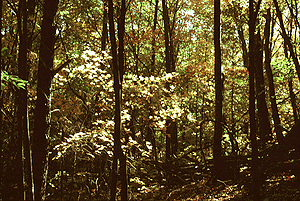
Introduction.The Temperate Broadleaf Deciduous
Forest
(TBDF)--especially in eastern North America, where is remains most
intact--is known for the turning of the colors of its leaves to
brilliant reds, oranges, and golds in autumn. The shortening days of
fall stimulate the plants to withdraw chlorophyll from their leaves,
allowing a brief but beautiful display of other pigments before the
leaves are shed completely and plants enter an extended period of
dormancy.
Climate: Associated with warmer continental
and humid
subtropical climates. There is an
approximately 6 month growing season. The 20 to 60 inches of
precipitation is distributed evenly throughout the year. The
non-growing season is due to temperature-induced drought during the
cold winters.
Vegetation: Included among these
genera are Quercus (oak), Acer
(maple), Fagus (beech), Castanea
(chestnut), Carya (hickory), Ulmus
(elm), Tilia (basswood or linden), Juglans
(walnut), and Liquidamber (sweet gum). Different species of these
genera occur on each continent.
Structure and Growthforms: Five layers are
recognized:
- a tree stratum, 60 -100 feet high, dominated regionally by
various combinations of the genera listed above;
- a small tree or sapling layer, with not only younger
specimens of the tall trees with species limited to this layer such as
(in Virginia) Allegheny serviceberry or shadbush, sourwood, dogwood,
and redbud;
- a shrub layer often with members of the heath family such
as rhododendron, azaleas, mountain laurel, and huckleberries;
- an herb layer of perennial forbs that bloom primarily in
early spring; and
- a ground layer of lichens, clubmosses, and true mosses.
Lichens and mosses also grow on the trunks of trees.
Other plants such as wild grape, poison ivy, and Virginia creeper climb
the trees to flower and fruit high in the forest canopy.
Soil: Brown forest soils develop under the
TBDF. Broadleaf trees tend to be
nutrient-demanding and their leaves bind the major nutrient bases. The
autumn
leaf fall provides for an abundant and rich humus which begins to decay
rapidly in spring just as the growing season begins. The humus content
gives the soil a brown color.
Other soils exist in the southeastern US, where
the
older soils of unglaciated regions have been weathered to a much
greater degree and are more completely leached than the younger soils
to the north. Distinctive red or yellow subsoils have developed under
the warmer climate. These soils are generally less fertile than
northern soils
and in the southeast were frequently further degraded by farming.
Fauna: Characteristic members of the animals are
either (nut and acorn feeders) or omnivores. Mammals show
adaptations to an arboreal life; a few hibernate during the winter
months.
- North American herbivores include white-tail deer, gray
squirrel, and chipmunk.
- Omnivores include raccoon, opossum, skunk, and black bear.
- Carnivores have been largely eliminated through the
deliberate
effort of humans but should include timber wolves, mountain lions, and
bobcats. The coyote, native to the western grasslands and deserts, has
recently dispersed east and taken over the niche of its departed
cousin, the timber wolf.
Resident bird species also tend to be seed-eaters or omnivores. Many,
like the several species of woodpeckers and the chickadees, are
cavity-nesters. The loud, conspicuous blue jay is a major agent in the
dispersal of oaks onto abandoned farmland and pastures. Migratory
species tend to be insectivorous and include many visitors, including
warblers, wrens, thrushes, tanagers, and
hummingbirds.
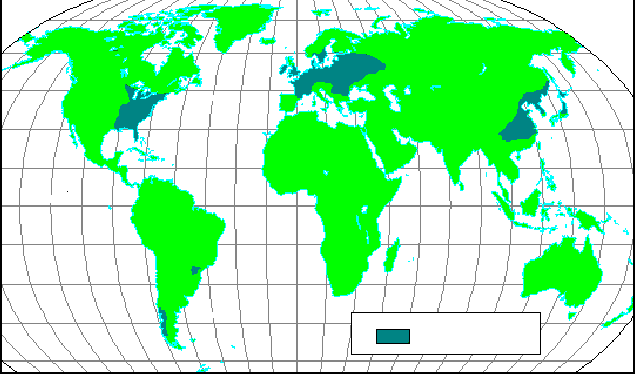
Distribution: The TBDF occurs in three
major, disjunct
expressions in western and central Europe; eastern Asia, including
Korea and Japan; and eastern North America.
- In Europe, a species-poor forest reflects widespread
extinctions during the Pleistocene. Oaks, beeches, and elms dominate.
Most of the forest was cleared for agriculture, with remnants surviving
only in some royal hunting preserves.
- The TBDF of China is known primarily from the fossil
record;
intensive agriculture has caused this region to be cleared of natural
vegetation for at least 4,000 years. Japan has a largely artificial
forest, but in the mountains of Korea the forest is more or less intact
and fall foliage is reminiscent of New England's.
- Almost all the forests of eastern North America are second
growth, but they preserve the world's greatest diversity of TBDF flora
and fauna. This is especially true of the unglaciated Appalachian
Plateau of eastern Kentucky and Tennessee and western North Carolina
and Virginia. The Great Smoky Mountains have been designated a world
biosphere reserve to help protect the rich assortment of species.